
Oshkosh homes built before the 1970s often feature plaster walls and balloon framing that allow water from roof leaks or pipe failures to travel unseen along joists, especially after heavy spring snowmelt in Winnebago County. Technicians use moisture meters and infrared scans to locate saturation behind trim and in subfloors without unnecessary demolition. Warm humid summers here promote rapid mold growth once hidden moisture reaches 60 percent relative humidity, so extraction must include dehumidification sized for the volume of air in older two-story structures near the University of Wisconsin-Oshkosh.
Ice dams along the Fox River corridor create slow leaks that pool inside attic insulation and drip into second-floor ceilings months later. Crews remove saturated cellulose or fiberglass batts, treat affected framing with antimicrobial solutions, and install air movers that account for the tight floor plans common in Northwest Oshkosh neighborhoods. Failure to address these hidden pockets leads to recurring musty odors and drywall delamination when winter temperatures drop again.
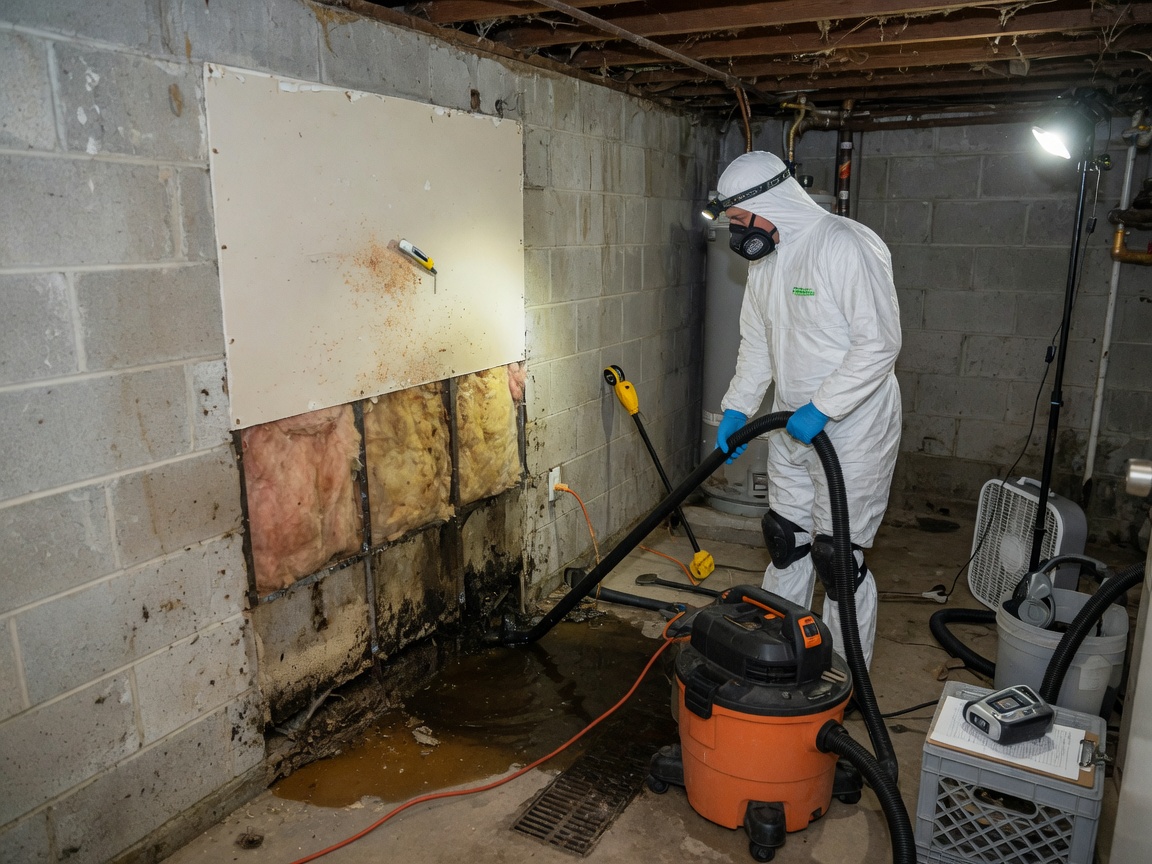
Basement slabs in properties near the Oshkosh Public Museum sit on clay soils that retain water after summer storms, pushing moisture upward through cracks and under finished flooring. Hidden damage here frequently involves base cabinets and HVAC ductwork. Restoration includes lifting flooring sections, drying the slab with low-grain refrigerant dehumidifiers, and sealing penetrations to prevent vapor transmission from the ground.
Emergency water extraction teams coordinate with local plumbers when supply lines in Green Bay Road corridor homes fail during freeze-thaw cycles, ensuring water is removed before it migrates into shared walls of duplexes common throughout the city.
Technician insight
In Oshkosh the thing that catches most people out with hidden water damage cleanup is how balloon-framed houses in the Downtown and Northwest neighborhoods let water travel two or three stories along interior walls after a winter pipe burst or ice dam. Homeowners often only notice staining on the first floor while the real saturation sits behind plaster on the second floor or in the attic, and the clay soil under many slabs keeps feeding moisture upward long after the initial leak stops.
Northwest Oshkosh Ice Dam Leak
A homeowner noticed a ceiling stain weeks after a heavy snow. Inspection revealed water had entered through an ice dam and traveled inside the balloon-framed walls. Crews extracted saturated insulation from the attic, dried the wall cavities with directed airflow, and treated the framing. Moisture readings returned to normal within five days and no demolition beyond insulation removal was required.
Hidden Water Damage Cleanup Services We Offer
✓Infrared Moisture Mapping
Non-invasive scanning locates hidden saturation behind walls and under floors in older Oshkosh homes without opening cavities.
✓Attic Insulation Removal and Drying
Extracts water-damaged insulation caused by ice dams and roof leaks typical after Winnebago County winters, then dries framing.
✓Basement Slab Moisture Extraction
Removes water that has wicked through clay soils beneath slabs in Downtown properties and prevents vapor drive into finished spaces.
✓Wall Cavity Drying
Uses directed airflow and dehumidification to dry plaster and lath walls common in Northwest neighborhood homes after hidden leaks.
✓Subfloor Saturation Treatment
Addresses water that travels under hardwood and tile in pre-war housing stock near the University of Wisconsin-Oshkosh campus.
Hidden Water Damage Cleanup Cost in Oshkosh, WI
| Service | Typical Range | What Affects It |
|---|---|---|
| Initial hidden moisture inspection | $250–$450 | Includes infrared scan and meter readings; higher for multi-story homes |
| Attic or wall cavity drying | $800–$1,800 | Varies with volume of insulation removed and length of drying cycle |
| Basement slab extraction and drying | $1,200–$2,500 | Affected by square footage and need for temporary flooring removal |
| Full hidden damage restoration package | $2,000–$4,500 | Covers extraction, drying, and antimicrobial treatment across multiple rooms |
Ranges are typical for Oshkosh, WI and confirmed with an exact written quote before any work starts.
How it works
- 1
Initial Assessment
Technicians inspect affected areas using moisture meters and thermal imaging to map hidden water paths in the specific construction of the property.
- 2
Water Extraction
Portable extractors and wands remove standing and trapped water from cavities, insulation, and subfloors.
- 3
Drying And Dehumidification
Air movers and commercial dehumidifiers are positioned to dry materials while monitoring humidity levels suited to Oshkosh climate conditions.
- 4
Final Verification
Post-drying readings confirm moisture levels have returned to normal before any reconstruction or finishing work begins.
Pricing
Pricing depends on the extent of hidden saturation, number of affected rooms, and whether insulation or flooring must be removed.