
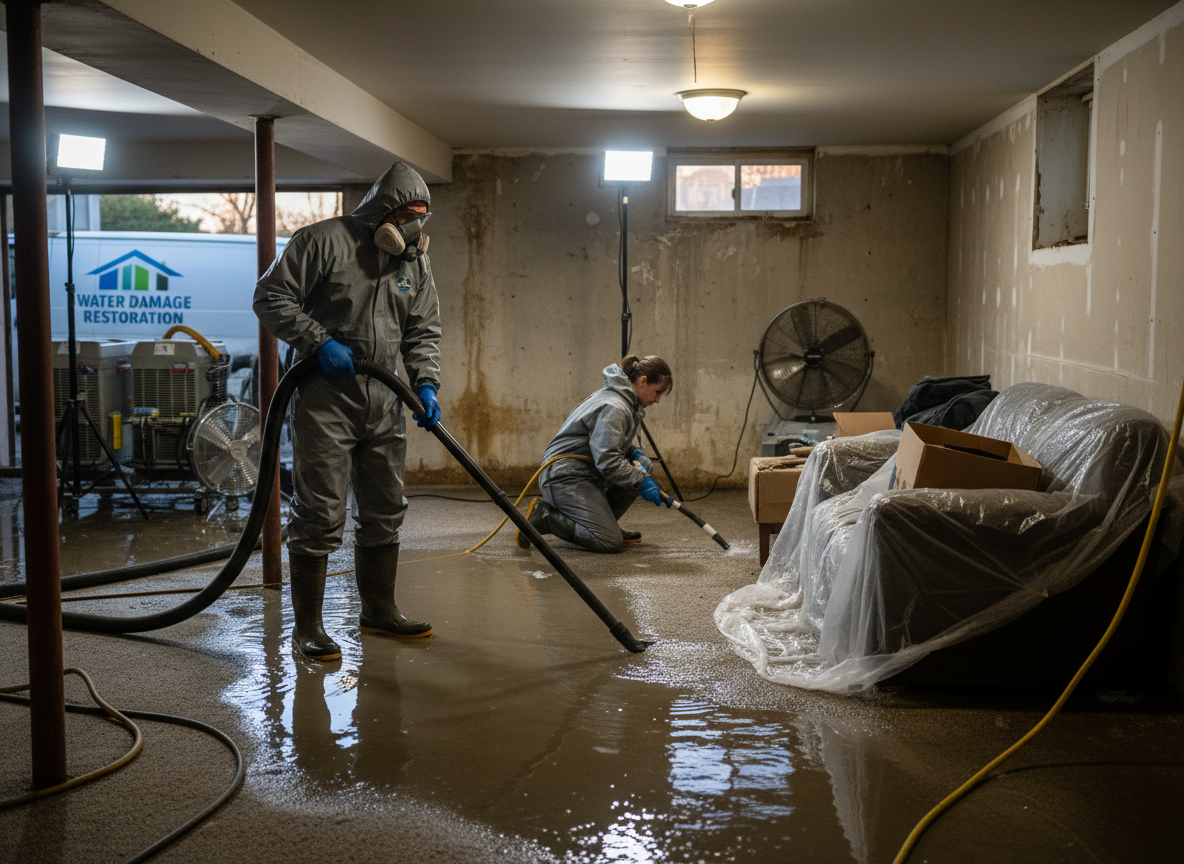
Oshkosh homes built before 1960 in the Downtown district often feature limestone foundations that crack under repeated freeze-thaw cycles common in Winnebago County's humid continental climate. When heavy spring snowmelt hits, water enters through these fissures and saturates the clay soils that dominate the area, turning a small leak into standing water across the entire basement slab within hours. Extraction crews must first isolate the source near the foundation wall before pulling volumes that can exceed several hundred gallons in older Northwest blocks.
Near the University of Wisconsin-Oshkosh campus, many rental properties sit on lots with poor grading that channels runoff directly toward basement windows. Sump pumps installed decades ago frequently fail during the rapid melt periods that follow cold, snowy winters, allowing water to rise above floor level. Technicians here use submersible pumps rated for high-volume removal while monitoring for hidden pockets trapped under concrete that later cause efflorescence on walls.
Properties closer to the Fox River or in low-lying sections of Northwest Oshkosh face additional pressure from seasonal water table rise after warm summer rains follow the spring thaw. Extraction work in these spots requires careful sequencing so that water is removed without undermining adjacent footings. Crews document moisture readings at multiple depths to confirm the job is complete before any drying equipment is placed.
Technician insight
In Oshkosh, the thing that catches most people out with Basement Water Extraction is how the heavy clay soils around Northwest and Downtown homes hold meltwater long after the snow is gone, so a job that looks finished on day one often needs a second extraction pass once the water migrates back toward the foundation.
Northwest Oshkosh Spring Melt
Heavy snowmelt overwhelmed a sump pump in a 1950s home near the Oshkosh Public Museum. Water rose four inches across the slab and began wicking into the floor joists. Extraction removed the standing water in one visit, followed by targeted drying that prevented mold growth in the joist pockets.
Basement Water Extraction Services We Offer
✓Sump Pump Failure Extraction
Rapid removal of water after sump pump breakdown during spring snowmelt in older Oshkosh basements.
✓Spring Thaw Water Removal
Targeted extraction of meltwater that enters through foundation cracks common in Winnebago County homes.
✓Sewer Backup Basement Extraction
Safe extraction and disposal of contaminated water from sewer backups affecting Downtown and Northwest properties.
✓Window Well Flood Extraction
Clearing water that overflows window wells after heavy rain or rapid snowmelt near the University of Wisconsin-Oshkosh area.
✓Foundation Seepage Extraction
Removal of slow seepage through limestone foundations typical in pre-1960 Oshkosh housing stock.
Basement Water Extraction Cost in Oshkosh, WI
| Service | Typical Range | What Affects It |
|---|---|---|
| Initial assessment and moisture mapping | Free | Always included before work begins |
| Standard basement extraction (under 6 inches) | $450–$900 | Depends on square footage and pump time |
| Contaminated water extraction | $700–$1,400 | Sewer or floodwater requiring special handling |
| Post-extraction drying equipment (per day) | $150–$300 | Number of days required after extraction |
Ranges are typical for Oshkosh, WI and confirmed with an exact written quote before any work starts.
How it works
- 1
On-Site Assessment
Technician inspects water depth, source, and soil conditions around the foundation in your specific Oshkosh neighborhood.
- 2
Water Extraction
High-volume pumps remove standing water while containing any contaminants before they spread.
- 3
Moisture Mapping
Readings taken at multiple points to locate trapped water in clay soils or under slabs.
- 4
Equipment Setup
Air movers and dehumidifiers positioned for targeted drying based on local humidity patterns.
- 5
Final Verification
Return visit confirms moisture levels have returned to normal before equipment removal.
Pricing
Pricing varies by water volume, access difficulty, and whether contaminants are present. Quotes are provided after the initial assessment.