
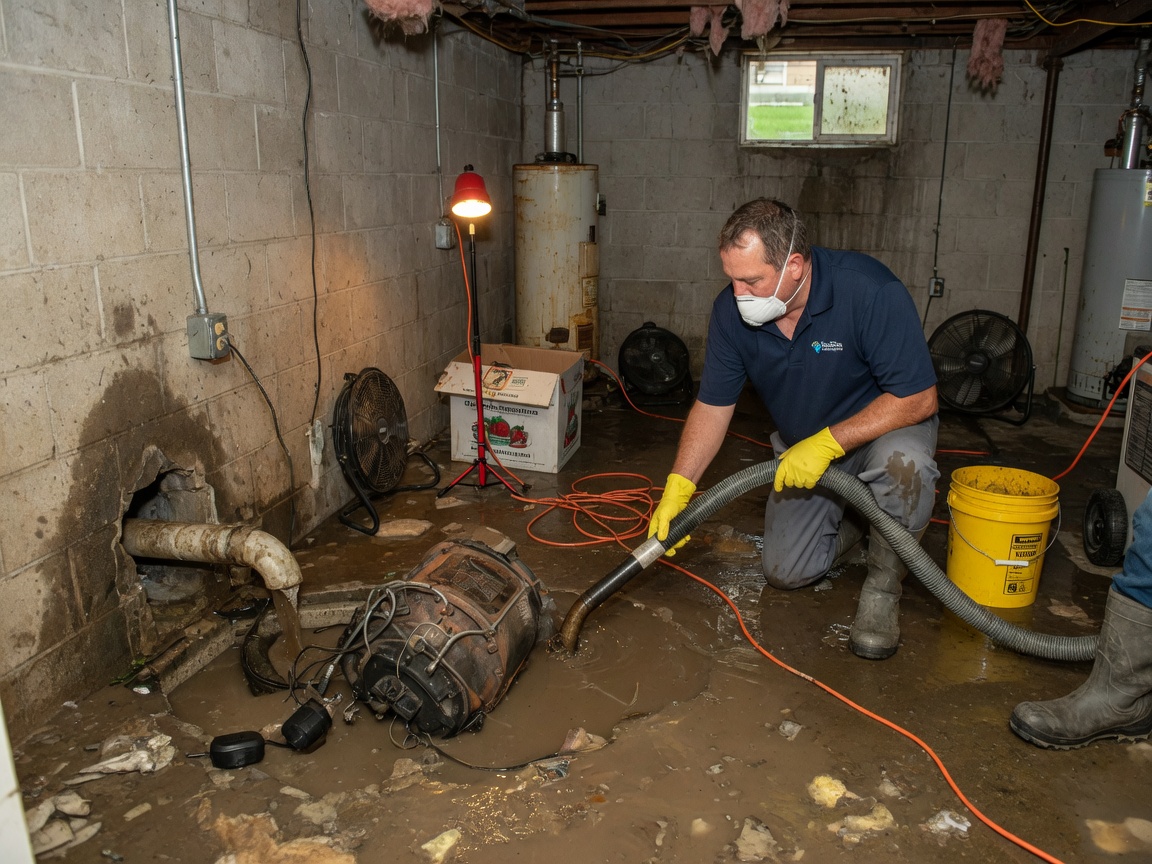
Oshkosh homes built before 1970 in the Downtown and Northwest neighborhoods often have older concrete foundations and clay-heavy soils common across Winnebago County. When a sump pump fails during spring thaw or a sudden warm spell after heavy snow, water backs up quickly because the ground stays saturated longer than in the sandier areas closer to Green Bay. We extract standing water, remove saturated insulation, and check for hidden moisture behind finished walls before mold sets in.
Winter conditions here bring repeated freeze-thaw cycles that can crack older discharge lines or freeze the pump itself. In these cases we trace the line from the pit to the exterior outlet, clear ice blockages, and test flow before leaving the property. Homes near the University of Wisconsin-Oshkosh campus frequently have finished lower levels that require careful drying of carpet pads and baseboards to avoid callbacks.
We also address the secondary flooding that occurs when sump failure coincides with heavy rain from the lake effect patterns that reach Oshkosh from Lake Winnebago. Extraction equipment is sized for the smaller basement footprints typical in these neighborhoods, and we ventilate properly to manage the higher humidity levels that linger after warm summer storms.
Technician insight
In Oshkosh the thing that catches most people out with sump pump failure cleanup is the clay soil in Winnebago County that holds water against older basement walls long after the pump is running again. Downtown homes from the early 1900s often have no exterior grading away from the foundation, so meltwater from a big snow year keeps re-entering the pit even after we extract the initial flood.
Northwest Neighborhood Winter Failure
Heavy snow melted rapidly in late February and the sump pump in a 1950s home near Northwest Oshkosh stopped. Water reached four inches across the basement floor. We extracted the water, cleared a clogged discharge line that had frozen near the outlet, cleaned the pit, and ran drying equipment for three days until readings were dry.
Sump Pump Failure Cleanup Services We Offer
✓Basement Water Extraction
Remove standing water from sump pump overflow in Oshkosh basements using truck-mounted equipment suited for narrow Downtown lots.
✓Sump Pit Cleaning and Debris Removal
Clear sediment, gravel, and debris from the sump pit that commonly builds up in clay soils around Northwest neighborhood homes.
✓Frozen Discharge Line Thawing
Locate and thaw frozen lines running from the pit to the exterior, a frequent winter issue after heavy snow in Winnebago County.
✓Post Failure Moisture Mapping
Use meters to find hidden moisture in walls and floors after pump failure, especially in older homes near the Oshkosh Public Museum.
✓Temporary Pump Installation
Set up a backup pump and battery system while the primary unit is repaired or replaced following sudden failure.
Sump Pump Failure Cleanup Cost in Oshkosh, WI
| Service | Typical Range | What Affects It |
|---|---|---|
| Basic Sump Failure Extraction | $450–$750 | Single room, under 6 inches of water, standard access |
| Full Basement Extraction | $850–$1,400 | Multiple rooms, deeper water, older foundation |
| Frozen Line Service Add-On | $200–$350 | Winter call, line location and thawing |
| Daily Drying Equipment Rental | $125–$200 per day | Number of days required after extraction |
Ranges are typical for Oshkosh, WI and confirmed with an exact written quote before any work starts.
How it works
- 1
Arrival And Assessment
We arrive at the Oshkosh address, inspect the failed pump, and measure water depth and spread into affected rooms.
- 2
Water Extraction
Remove standing water with portable and truck-mounted units, routing discharge away from neighboring properties on narrow city lots.
- 3
Pit And Line Service
Clean the pit, clear the discharge line, and test flow before any drying equipment is placed.
- 4
Drying And Monitoring
Position air movers and dehumidifiers, then return daily to check moisture levels until the structure is dry.
Pricing
Upfront quote after on-site inspection; final cost depends on water volume and access.