
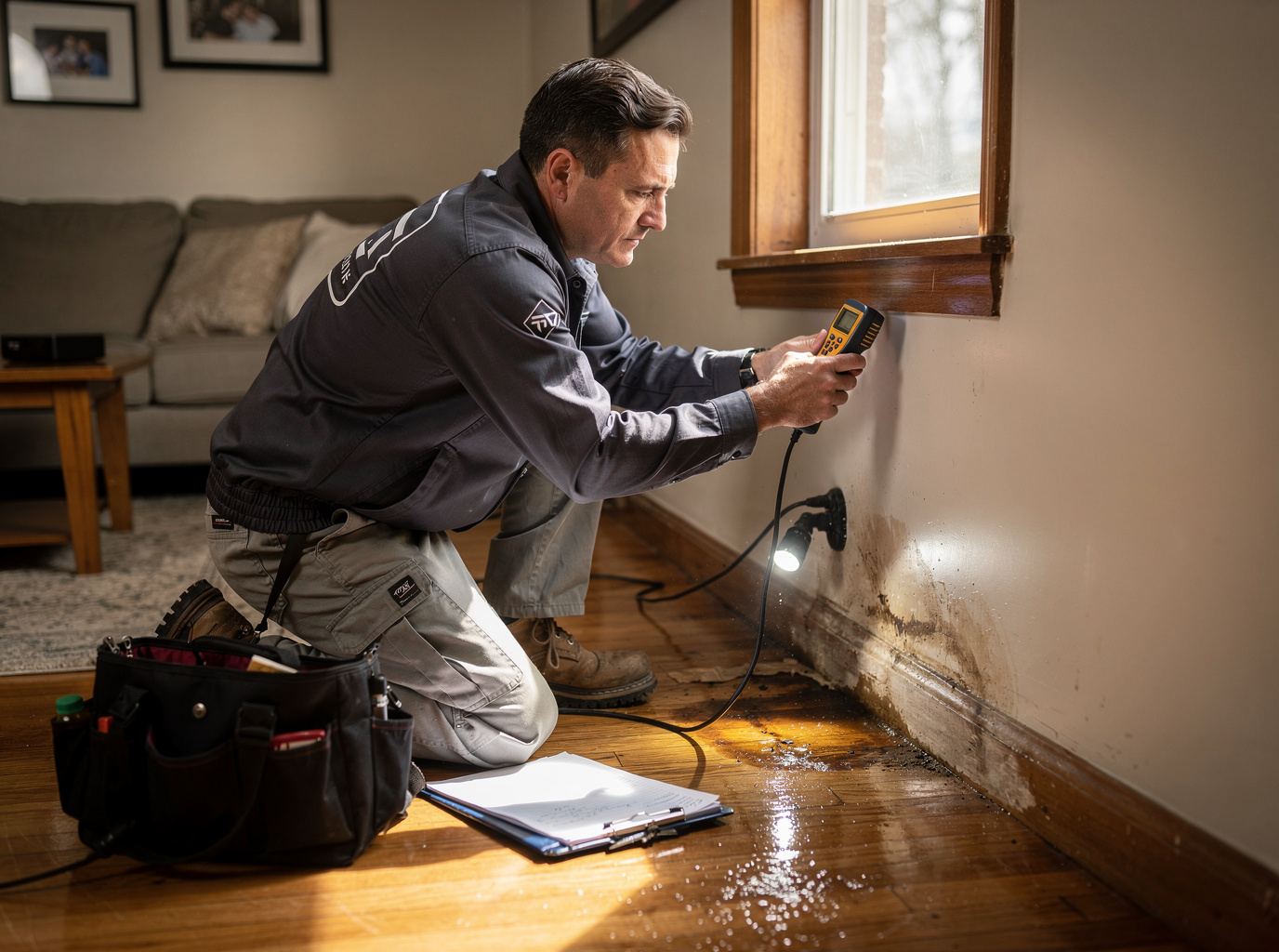
Oshkosh homes built before 1960 in Downtown and Northwest neighborhoods often hide leaks behind plaster walls or under wide-plank floors. Snowmelt from the area's heavy winter accumulations seeps through roof valleys or ice dams, travels along joists, and pools in basements without visible ceiling stains. Winnebago County's clay-heavy soils slow drainage, so water stays trapped longer and forces technicians to pull baseboards and use moisture meters on multiple levels rather than relying on surface signs alone.
University of Wisconsin-Oshkosh dorms and nearby apartments share similar issues with aging galvanized supply lines that corrode from the inside. When a pinhole leak occurs behind a shared wall, water follows the path of least resistance into adjacent units. Extraction crews must isolate the affected cavity with containment barriers and run negative air machines to prevent mold spores from migrating through the building's common ventilation shafts during warm summer months.
Properties near the Oshkosh Public Museum and along the Fox River corridor face additional challenges from high groundwater after spring thaws. Water enters through unsealed limestone foundations and travels horizontally under slab floors. Technicians routinely cut strategic access ports in finished basements, extract standing water with submersible pumps rated for sediment-laden conditions, and document moisture readings at multiple depths to satisfy insurance adjusters who require proof that all hidden pockets have been addressed.
Technician insight
In Oshkosh the thing that catches most people out with Water Damage With No Obvious Source is the way heavy winter snow sits on older roofs in Northwest neighborhoods and melts slowly into the attic, then travels along ceiling joists into rooms two stories below before anyone notices a spot on the first-floor drywall.
Downtown Duplex Hidden Leak
A homeowner in a 1920s Downtown duplex noticed musty air after a January thaw. Inspection revealed water had entered through an ice dam, followed rafters, and pooled behind a shared plaster wall. Crews opened two access points, extracted the water, and dried the cavities over four days before reinstalling baseboards.
Water Damage with No Obvious Source Services We Offer
✓Hidden Pipe Leak Extraction
Trace and remove water from corroded supply lines behind walls in older Winnebago County homes without unnecessary demolition.
✓Ice Dam Water Removal
Extract meltwater that has traveled under shingles and into attics after heavy Oshkosh snowfalls before it reaches living spaces.
✓Foundation Seepage Extraction
Pull water from clay-soil basements in Northwest neighborhoods where poor drainage allows groundwater to enter through mortar joints.
✓Wall Cavity Moisture Removal
Dry concealed spaces in plaster-and-lath construction common around the University of Wisconsin-Oshkosh campus.
✓Slab Leak Water Extraction
Access and remove water trapped under concrete floors from failed radiant heat lines or sewer backups in Downtown properties.
Water Damage with No Obvious Source Cost in Oshkosh, WI
| Service | Typical Range | What Affects It |
|---|---|---|
| Initial hidden-source inspection | $125–$225 | Includes thermal scan and meter readings in one- or two-story homes. |
| Wall cavity extraction and drying | $450–$950 | Varies with number of affected cavities and whether plaster must be removed. |
| Ice dam attic water removal | $600–$1,200 | Higher when insulation must be extracted from multiple bays. |
| Foundation seepage extraction | $550–$1,100 | Depends on sediment load and depth of water behind walls. |
Ranges are typical for Oshkosh, WI and confirmed with an exact written quote before any work starts.
How it works
- 1
On-Site Assessment
Technician arrives at the address, interviews the homeowner about recent weather events, and uses infrared imaging plus pin meters to map moisture migration through the structure.
- 2
Source Isolation
Shut off water where possible, create containment zones, and confirm the leak path using the county's typical winter freeze-thaw patterns as a guide.
- 3
Targeted Extraction
Deploy submersible pumps and air movers sized for the volume found, then remove saturated insulation and baseboards to reach hidden pockets.
- 4
Verification and Drying
Re-check moisture levels daily until readings match unaffected areas, then document conditions for the property file.
Pricing
Upfront quotes after inspection; final cost depends on hidden extent and access difficulty.